Getting started is often the hardest part. I have been there too.
This article is here to help you move forward with clarity and confidence. You will find practical tips, honest advice, and simple steps you can actually use.
I have spent years figuring out what works and what just wastes time. That experience is exactly what shaped this guide.
We will cover the key tips to keep in mind and get your most common questions answered in a simple and straightforward way.
No complicated language. No filler. Just real, helpful information.
If you have been looking for straightforward guidance that actually makes sense, you are in the right place.
What are River Rock Shower Floor Problems?

River rock shower floors look great at first, but the problems show up quickly.
The many grout lines collect dirt, soap, and minerals fast, causing dark stains. Water gets trapped between the stones, leading to mold and mildew growth.
Cleaning takes serious effort since every gap needs scrubbing with a stiff brush. The uneven surface can block drainage and leave puddles that damage grout over time.
Standing on rounded stones causes foot discomfort, and the slip risk is real. Without regular sealing, the floor deteriorates fast and becomes costly to repair.
Common River Rock Shower Floor Problems
River rock shower floors look great but come with some common problems that are good to know about early.
Water Pooling Near the Drain

Water pooling happens when the floor was not sloped correctly toward the drain during installation. Even a small angle mistake causes standing water after every shower.
Start by checking for clogs from hair or soap buildup. If the drain is clear and water still sits, the slope may need a professional fix.
Loose Pebbles and Cracked Grout

Grout holds the stones in place. Heavy foot traffic and water exposure break it down over time, causing pebbles to shift or fall out.
Remove loose stones, clear out old grout, and re-grout the area. Then seal the floor to protect it from future water damage.
Mold, Odors, and Stains

The gaps between stones trap moisture and soap scum. This leads to mold, bad smells, and dark stains over time.
Scrub regularly with a grout brush and keep the bathroom well ventilated. Sealing the grout also helps prevent stains from setting in.
Uneven or Rough Surface

River rocks are naturally bumpy, which can feel uncomfortable underfoot and make cleaning harder. Dirt and soap settle deep into the low spots between stones.
A handheld scrub brush works better than a mop for cleaning. Placing a non-slip bath mat inside the shower adds comfort and safety.
What Causes River Rock Shower Floor Problems?
River rock shower floors can look great, but they come with real issues. Knowing what causes these problems helps you fix them faster.
Poor Drainage and Slope

Water needs to flow somewhere. If your shower floor does not have the right slope, water just sits there.
A proper slope directs water toward the drain. Most experts suggest at least a quarter-inch drop per foot. Without this, you end up with standing water after every shower.
Standing water leads to bigger problems over time. It encourages mold growth and weakens the grout between the stones.
Moisture and Soap Buildup
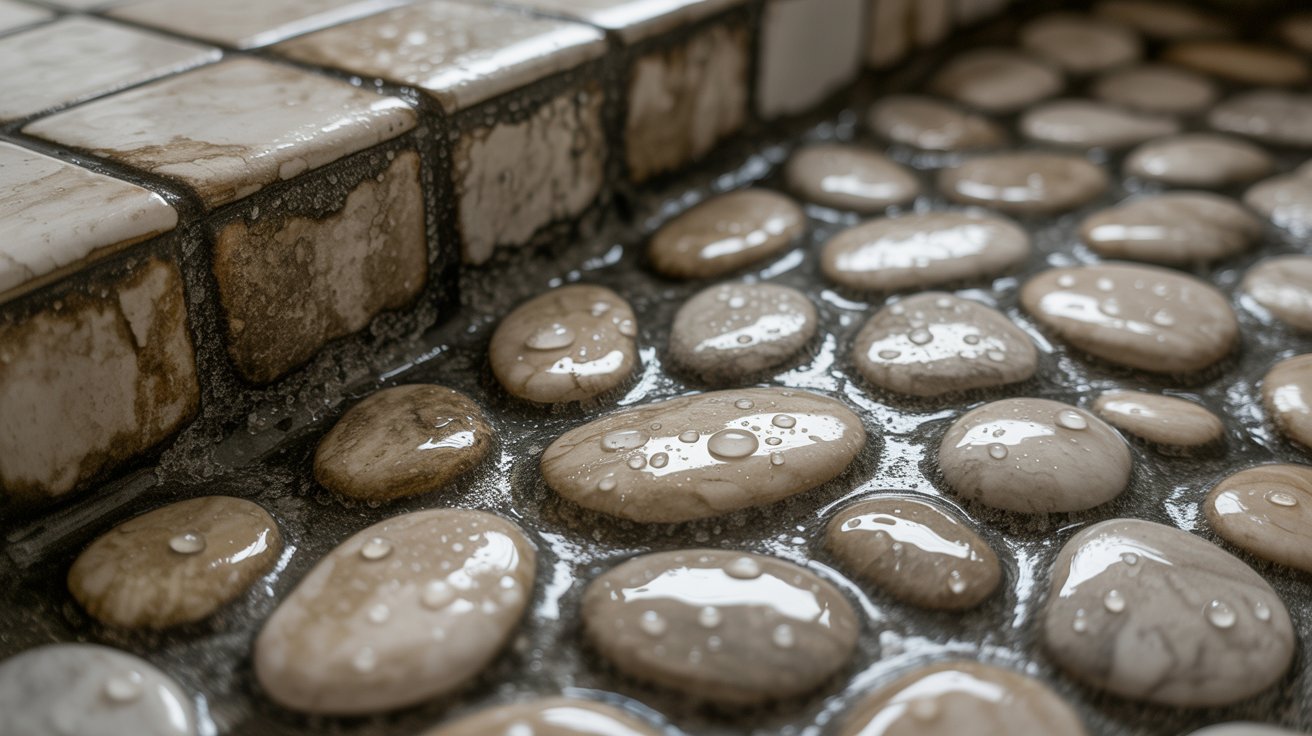
River rock floors have lots of small gaps between the stones. Soap, shampoo, and body wash get into those gaps easily.
Over time, this buildup becomes sticky and hard to remove. It also holds moisture, which creates the perfect environment for mold and mildew.
The texture of river rocks makes cleaning harder compared to flat tiles. Regular rinsing is not always enough to keep the gaps clean.
Installation Mistakes

Bad installation is one of the most common reasons river rock floors fail early.
If the mortar bed is uneven, stones shift or crack under pressure. Gaps that are too wide or too narrow also cause problems down the line.
Some installers skip important steps like properly setting the slope or using the right type of mortar. These shortcuts cause real damage that becomes costly to repair later.
Lack of Sealing and Maintenance

River rock floors need to be sealed, and they need it more than once.
Sealer protects both the stones and the grout from water and stains. Without it, moisture soaks in and breaks down the grout over time.
Many homeowners seal the floor once and forget about it. But sealers wear off. Resealing every six to twelve months keeps the floor protected and looking its best.
Skipping regular cleaning and maintenance speeds up the damage. A little care goes a long way with this type of flooring.
How to Solve River Rock Shower Floor Problems

To deep clean, mix warm water with a pH-neutral cleaner and scrub between each pebble with a stiff grout brush. For stubborn mold, apply a baking soda paste, let it sit for 10 minutes, then scrub and rinse well.
For loose pebbles, chip away the old adhesive with a putty knife, apply fresh tile adhesive, press the stone back, and let it cure for 24 hours.
Fix cracked grout by removing damaged sections with a grout saw, applying sanded grout with a rubber float, and wiping off excess before it hardens.
For drainage issues, clear the drain cover of hair and debris, and use a drain snake for deeper clogs. Once the floor is fully dry, apply a penetrating stone sealer and add a second coat for better protection. Most floors need resealing once a year to stay in good shape.
How to Prevent Future Problems

Small habits done regularly can save you from big repairs later.
Weekly Cleaning Tips
Wipe down surfaces after every use to stop dirt and grime from building up. Clean grout lines once a week with a soft brush, mild soap, and warm water.
Never let spills sit. Clean them up right away.
Proper Sealing and Ventilation
Check seals around your sink, tub, and tiles every few months. Replace cracked or broken caulk quickly.
Run your exhaust fan for at least 15 minutes after every shower to keep moisture under control.
Preventing Water Pooling
Keep drains clear by checking them monthly and removing hair or debris. If water collects in one spot, the floor slope may need attention.
Also check around the base of your toilet and under your sink for slow leaks.
Repair vs Replacement

Repairs make sense when the damage is small, the item is newer, and the fix costs far less than buying new. But if the same problem keeps coming back, repair bills add up fast and replacement becomes the smarter choice.
When repair costs are close to the price of a new one, or parts are hard to find, do not bother fixing it.
Safety should always come first. If the damage puts anyone at risk or performance stays poor even after repairs, it is time to replace it without hesitation.
Tips to keep in mind
A few simple tips can save you time, effort, and stress while helping you get better results every time.
- Keep things simple and focus on one task at a time. Trying to handle too much at once slows you down and leads to mistakes.
- Always double-check your work before moving forward. A quick review takes only a few minutes but can save you a lot of trouble later.
- Stay consistent with your efforts. Small steps taken every day bring better results than rushing everything at the last minute.
- Ask for help when you feel stuck. Getting the right input early saves time and keeps things moving in the right direction.
- Track what works and what does not. Keeping a simple record helps you avoid repeating the same mistakes and makes future tasks much easier.
Conclusion
Honestly, I used to skip over tips like these and just wing it. Big mistake. Once I started applying even two or three of these, things got a lot smoother.
You do not need to follow all of them at once. Start small, stay steady, and build from there.
If this helped you in any way, drop a comment below and let me know which tip you are trying first. And if someone you know could use this, go ahead and share it with them.
Frequently Asked Questions
What is the best way to stay consistent when trying something new?
Start with small, manageable steps instead of going all in from day one. Building a simple routine helps you stay on track without feeling overwhelmed.
How do I know if I am making progress?
Keep a short record of what you do each day so you can look back and see how far you have come. Even small wins count and deserve to be noticed.
What should I do when I feel stuck or lost?
Take a short break and come back with a fresh mindset. Talking to someone with more experience can also point you in the right direction quickly.
How many tips should I follow at once?
Pick two or three that feel most relevant to your situation and focus on those first. Adding too many changes at once can make things harder than they need to be.
How long does it take to see real results?
It depends on your effort and how regularly you apply what you have learned. Most people start noticing a difference within a few weeks of staying consistent.