Picking the right floor is not easy. I have helped many homeowners work through this decision, and LVP flooring comes up almost every time.
This guide covers everything you need to know. We will look at where LVP works best, when to skip it, and practical tips to help you choose with confidence.
No confusing jargon. No fluff. Just clear, honest information.
With years of flooring research and hands-on experience, I know what actually works in real homes.
By the end, you will know exactly whether LVP flooring fits your space and your life.
What Is LVP Flooring?

LVP stands for Luxury Vinyl Plank. It is a synthetic flooring product designed to look like real hardwood at a much lower cost.
It is built from multiple layers that work together to resist water, scratches, and daily wear. The core is either WPC (softer, more comfortable) or SPC (harder, better for high-traffic areas). Both are fully waterproof, making LVP a solid choice for kitchens, bathrooms, and basements.
A printed design layer mimics real wood or stone, while a clear wear layer on top protects against scratches and stains. Thicker wear layers mean better durability over time.
Most planks use a click-and-lock system, making installation fast and DIY-friendly without glue or nails.
For homeowners who want a durable, waterproof, and stylish floor without the high price tag, LVP is one of the smartest options available.
What Is LVP Flooring Made Of?
LVP flooring is made from multiple synthetic layers that work together to deliver durability and water resistance.
LVP Flooring Layers
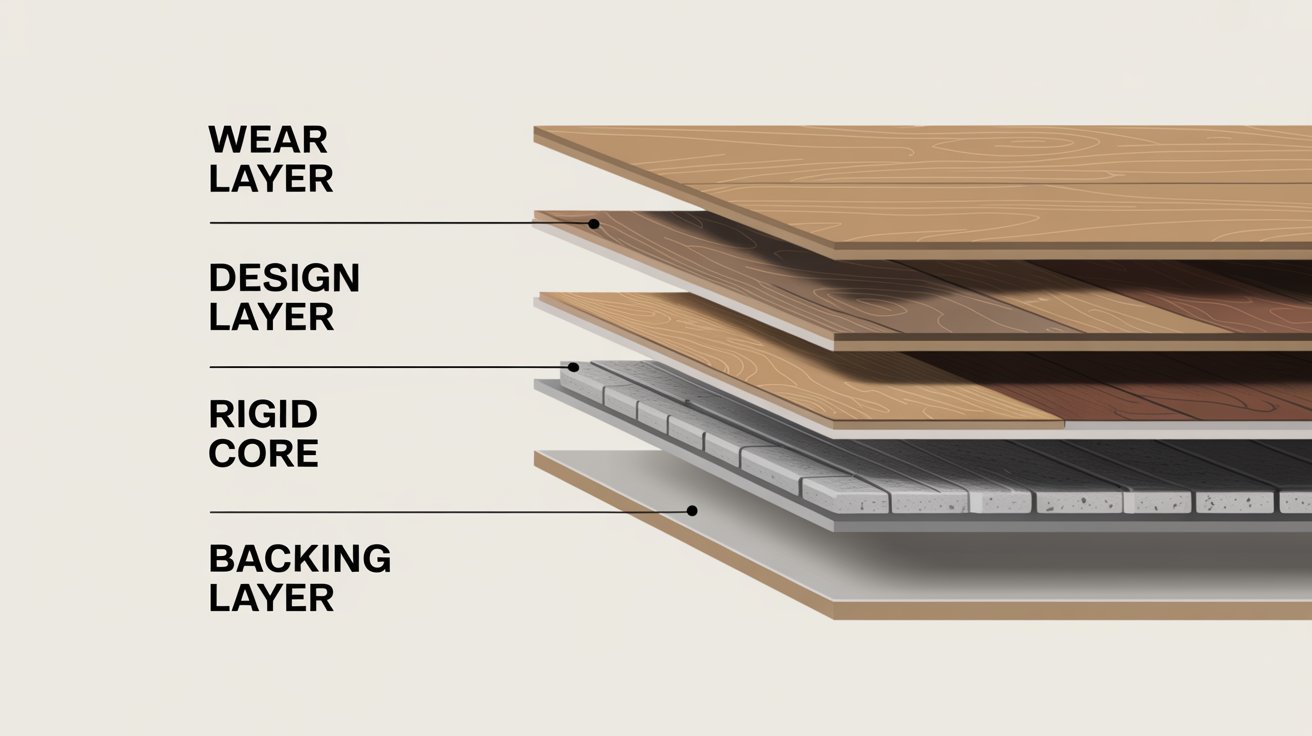
LVP planks are built from four main layers:
Wear Layer: The top protective layer that resists scratches and stains. Thickness ranges from 6 mil to 20 mil.
Printed Design Layer: Sits below the wear layer and carries a high-resolution image that mimics real wood or stone.
Core Layer: The thickest part of the plank. It provides strength and stability.
Backing Layer: The bottom layer that adds cushioning and absorbs sound.
WPC vs SPC Core

The core type defines how the floor performs.
WPC (Wood Plastic Composite): Made from wood pulp and plastic. It is softer and thicker, making it more comfortable underfoot. Best for areas where you stand for long periods.
SPC (Stone Plastic Composite): Made from limestone powder and plastic. It is harder, denser, and handles heavy traffic and temperature changes well. Best for high-traffic areas.
Both core types are 100% waterproof and work well in kitchens, bathrooms, and basements.
What Is LVP Flooring vs Laminate?

LVP is made from 100% synthetic PVC layers, making it fully waterproof and ideal for kitchens, bathrooms, and basements. Laminate has a wood-based HDF core and works best in dry areas like bedrooms and living rooms, though newer versions offer limited water protection.
In terms of durability, both options last well, with LVP offering 20 or more years and laminate up to 25 years. LVP allows individual plank replacement, while laminate scratches are permanent.
LVP also feels softer and quieter underfoot, while laminate can sound hollow without underlayment.
Cost-wise, laminate is more affordable, while premium LVP runs slightly higher. LVP suits wet areas, pets, and active homes, while laminate is a solid pick for dry rooms and budget-friendly installs.
What Is LVP Flooring vs Vinyl?

LVP and vinyl flooring look similar but differ in structure, durability, and price. Here is a clear breakdown.
Standard Vinyl vs LVP
Vinyl flooring comes in sheets or tiles and is thin and flexible. It is soft underfoot and works well for tight budgets.
LVP stands for Luxury Vinyl Plank. It is built in long plank shapes to mimic hardwood. The core is thicker and more rigid than regular vinyl.
LVP has multiple layers including a wear layer, a printed design, a rigid core, and a backing. This makes it stronger and more stable underfoot.
Both are water resistant, but many LVP products are fully waterproof, making them better suited for kitchens and bathrooms.
Cost and Performance Comparison
Standard vinyl costs $1 to $2 per square foot. It is budget friendly but wears out faster in busy areas.
LVP runs $2 to $7 per square foot. It costs more upfront but lasts 20 to 25 years with basic care.LVP resists scratches better, looks more like real wood, and holds up well in homes with pets or kids.
For long-term use, LVP gives better value. For a quick, low-cost fix, standard vinyl still works fine.
Is LVP Flooring Waterproof?

LVP flooring is fully waterproof at the plank level. The solid vinyl core does not absorb water, so spills, wet feet, and regular mopping are no problem.
Waterproof vs Water Resistant
Water resistant flooring handles small splashes for a short time, but prolonged exposure can cause damage through the seams.
LVP goes further, it will not warp, swell, or buckle from moisture, giving it a clear edge over hardwood and laminate in wet conditions.
One thing to keep in mind:if large amounts of water get under the planks and sit there, the subfloor can still be affected. Sealing seams properly during installation prevents this.
Best Rooms for LVP Flooring
LVP works well across the entire home. Bathrooms and kitchens benefit from its moisture resistance and easy cleanup.
Basements and laundry rooms deal with humidity and leaks, and LVP handles both without special care.
Living rooms and bedrooms gain from its durability and low maintenance, even without heavy moisture exposure.
Simply put, LVP is one of the few flooring options that performs confidently in every room of the home.
Pros and Cons of LVP Flooring
LVP flooring has real strengths, but it also comes with a few trade-offs worth knowing before you buy.
Main Benefits
LVP stands up well to scratches, moisture, and heavy foot traffic. It works in kitchens, bathrooms, and basements without warping.
Installation is simple with its click-lock design, and cleanup takes very little effort. It also costs much less than hardwood or stone.
Common Drawbacks
LVP can feel hollow underfoot and may buckle in high heat or direct sunlight. It's made from plastic, so it's not eco-friendly.
Over time, the surface can show wear, and some buyers prefer real wood when looking at homes.
What Is LVP Flooring Cost?

LVP flooring typically costs between $2 and $7 per square foot, covering both materials and installation.
The final price depends on plank quality, room size, and whether you hire a professional or install it yourself.
Material Costs
Budget planks run $1 to $3 per square foot and work well for low-traffic areas. Mid-range options fall between $3 to $5 and suit kitchens, living rooms, and hallways.
Premium planks start at $5 and go beyond $10 per square foot for the best durability and most realistic wood look.
Installation Costs
DIY installation eliminates labor costs entirely since click-lock planks are easy to install. Professional labor adds $1.50 to $4 per square foot.
Subfloor leveling adds $1 to $3 per square foot, and old floor removal adds another $0.50 to $1.50 if needed.
What to Budget Overall
For a 200-square-foot room, total costs typically range from $500 to $1,400 depending on material grade and labor.
Choosing mid-range LVP with DIY installation is often the best value for most homeowners.
How Durable Is LVP Flooring?

LVP flooring is built to handle daily wear. It performs well in high-traffic spaces and holds up better than most expect.
Wear Layer Explained
The wear layer is a clear protective coating on top of every LVP plank. It shields the floor from scratches, scuffs, and stains. Thickness is measured in miles.
Light-use rooms can work with 6 mil, but kitchens and hallways do better with 12 mil or more. Thicker means longer-lasting.
Lifespan and Maintenance
With proper care, LVP lasts 15 to 25 years. Sweep a few times a week and mop with a mild vinyl-safe cleaner. Skip the steam mop as heat can warp the planks.
Use felt pads under furniture and rugs in heavy-traffic spots. No waxing or refinishing needed.
Tips for LVP Flooring
LVP flooring is a smart pick for many homes. These tips help you choose, install, and care for it the right way.
- High-traffic areas love LVP. It holds up well under heavy foot traffic and cleans up fast.
- Homes with pets or kids are a great match. LVP resists scratches and spills and wipe right up.
- Basements are solid candidates. LVP handles moisture far better than wood or laminate.
- Budget-conscious homeowners get the look of real wood or stone at a much lower price point.
- Rental properties benefit from LVP since it is durable, low maintenance, and holds its appearance over time.
Conclusion
Choosing the right floor changed how I felt about my own space. Once I put LVP in my kitchen, I stopped worrying about spills and scratches. It just made daily life easier.
If you are thinking about updating your floors, LVP is worth a serious look. It fits real life, not just a showroom.
Have you tried LVP flooring in your home? Drop your experience in the comments below. I would love to hear what worked for you!
Frequently Asked Questions
What is LVP flooring and why is it popular?
LVP stands for luxury vinyl plank. It is popular because it looks like real wood, resists water, and costs much less than hardwood.
Is LVP flooring good for homes with pets and kids?
Yes, it is one of the best options for busy households. It handles scratches, spills, and heavy foot traffic without showing much wear.
Can LVP flooring be installed in basements?
Absolutely. LVP is waterproof or water-resistant, making it a reliable choice for basements and other moisture-prone areas.
How long does LVP flooring typically last?
With proper care, LVP can last anywhere from 15 to 25 years. Regular cleaning and avoiding sharp object drag marks will help it stay in good shape longer.
Is LVP flooring easy to maintain?
Yes, it is one of the lowest-maintenance floor options available. A simple sweep and occasional damp mop is all it takes to keep it looking clean and fresh.